
Issue #14 · Wednesday, 17 June 2026
7,000 languages. AI works for 20.
Language technology, content, the technology underneath: all three areas moved last week. The current pace is unique in many ways.
The big one: a US export order switched off Anthropic's newest and best model for everyone outside America, days after launch. At LocWorld in Dublin, the language industry showed the shape of things to come for the content adaptation tasks. In very short: Depending on just one or very few US models is not a valid scenario for the future.
THE NUMBER
3 days
Anthropic launched Claude Fable 5, its most capable model, on 9 June. Three days later a US Commerce Department export-control directive ordered access suspended for any foreign national, and Anthropic disabled the model worldwide to comply.
Why care? The order reached non-citizens inside the United States, including Anthropic's own employees; because the company cannot screen citizenship in real time, everyone lost access. The most capable AI on the market, here on Monday, gone by Thursday — by a decision made in another country.
THIS WEEK
Story 1 — US publishers tell Common Crawl to delete them
9 June · Press Gazette / Digital Content Next
What's new: Digital Content Next (DCN), the US trade body for major publishers, sent Common Crawl a cease-and-desist letter demanding it stop scraping, retaining or sharing their copyrighted, paywalled and subscriber-only content, and delete what it already holds.
Why care? Common Crawl is the open web archive most large models were trained on — a 2024 Mozilla Foundation paper argued generative AI "would probably not be possible" without it. The move is the flip side of a pitch from WAN-IFRA, the global news-publishers' association: set common, machine-readable rules for AI use collectively, while standards are still forming, rather than each title negotiating alone.
Current status: A demand letter is not a court order. Common Crawl is a nonprofit caught in a fight whose real targets are the insatiable AI data and content collectors downstream. So this is the same "collateral damage" pattern as the Internet Archive dispute. Common Crawl's director rejects the framing; he told The Atlantic last year, "You shouldn't have put your content on the internet if you didn't want it to be on the internet."
Story 2 — A US order pulls Anthropic's best model worldwide
12–15 June · Anthropic / Euronews / practitioner reaction
What's new: A US export directive forced Anthropic to suspend Fable 5 and Mythos 5 for all foreign nationals; unable to screen users in real time, the company disabled both for everyone.
Why care? A model European and Asian teams had built into real work vanished overnight, by a decision in Washington — and the reactions show it will not blow over. Ezra Eeman calls model access itself a new "geopolitical control point"; Marie Kilg says the only defence is building to switch providers, not depend on one. And take a bit of time to read Europe 2031, a scenario paper out a day earlier: a five-year picture of Europe's slide into irrelevance, how AI is driving it, and what could still change course. It is a depressing read if you are European and want to innovate.
Current status: Anthropic disputes the basis and says the cited flaw exists in other models; the government, via adviser David Sacks, says Anthropic refused to fix it. The directive's specific national-security concern has not been disclosed.
Story 3 — Apple keeps Siri's AI out of the EU
9 June · Reuters
What's new: Apple will not launch its Siri AI features in the EU after the European Commission rejected an 18-month exemption from the Digital Markets Act (DMA) interoperability rules.
Why care? Which markets — and which languages — get a given AI feature is now decided by regulators, not product roadmaps.
Current status: Apple frames the rules as a privacy and security risk; the Commission says the decision is Apple's alone. Europe is about 27% of Apple's sales.
Story 4 — Google's Gemini moves live translation to continuous speech
9 June · Google
What's new: Gemini 3.5 Live Translate does speech-to-speech across 70+ auto-detected languages, generating the translation continuously rather than waiting for each turn; output carries a SynthID watermark.
Why care? The live-speech race has moved from whether it works to how few seconds behind the speaker it runs. Some latency will always be there, but for - say - people at a conference a slight delay between spoken word and display of the transcript is potentially the best way to present the live translation anyway.
Current status: The 70+ figure comes with no per-language quality data — the familiar gap between languages supported and languages usable — and the deployments are described as testing, not production. Latency and quality claims are vendor-stated.
TALK OF THE WEEK
Buyers become builders
How professionals are integrating AI for content adaptation
I was not in Dublin for LocWorld55 last week, but Konstantin Dranch was, and the language-industry researcher published a sharp list of take-aways worth reading in full. The one that stays with me is his sketch of the localisation team of 2026: two to five engineers, a diplomatic leader, project managers who have moved from linguistic work to technical work like development and evaluation, and linguists reassigned as in-country language-risk advisors.
The work runs on an in-house pipeline built on large language models, where quality is judged by a panel of AI models with shrinking human involvement. The better pipelines feed documents and visual context to the models, connect through the Model Context Protocol (MCP), and turn human corrections into permanent improvements.
What counts as "good" is changing too. The industry used to grade a translation on whether it was linguistically correct — a formal score sheet counting errors. Companies like KnowBe4, Trendyol, SAP and OpenAI now grade it on whether it sells and protects the brand in that market, not whether it is perfect. As Dranch reports it, Nicolas Jadot of Trendyol put the new attitude bluntly: chasing every small language error is not worth the cost at scale.
The structural shift is the headline. With in-house orchestration at companies like DHL, Miro, AstraZeneca and Trendyol, the traditional stack — the translation management system (TMS) and the language service provider (LSP) — is being featurised or bypassed. "We only use the TMS when we need human review" was a common line at LocWorld. The budgets that once paid for that stack now flow to OpenAI and Anthropic tokens. Dranch reckons Anthropic's annual run-rate is now in the tens of billions, and climbing.
My main take-away because that is relevant for our work is that into the future an effective team can be small: Two engineers and a diplomat.
GOOD TO KNOW
16 economists on AI and work (Wall Street Journal) — Nearly all sixteen expect higher productivity, but only two expect net job growth, and they split evenly on inequality. "Translating documents" appears by name on the list of routine tasks exposed to displacement.
The hybrid AI-human workforce (New York Times Magazine) — A panel with Acemoglu, Mollick, Shih and Ball lands on the collapse of apprenticeship as the real problem with entry-level work. It also argues over the Pope's call for an AI stakeholder committee — a useful marker of how far the governance debate has moved.
Anthropic's analytics skill template — Anthropic published a data-analysis skill template and a claim that writing it well sharply raised accuracy on the same underlying model. The reusable idea is the discipline around the model: a single source of truth, an adversarial review step, and a provenance footer recording source, confidence and freshness. (Khalil Cassimally's summary is a clear walk-through.)
ON THE CALENDAR
European Publishing Congress · 17–18 June 2026 (on now) · Vienna (Palais Niederösterreich) · publishing-congress.com · Europe's media leaders on the strategic realignment of publishing around AI — revenue models beyond licensing, AI-enabled newsrooms, and trust in the age of generated content.
DW Global Media Forum · 23–24 June 2026 · Bonn (World Conference Center) · dw.com/gmf · Deutsche Welle's annual international media conference; this year on disinformation, AI and media innovation. Disclosure: I'll be there, as will Priberam, our plain X partner — come say hello.
AI Licensing Landscape (WAN-IFRA webinar) · 24 June 2026 · online · wan-ifra.org · A strategic overview of the AI licensing landscape for publishers, with TollBit's "State of the Bots" data — bot protection, communicating use and compensation terms, and making archives machine-readable.
LocWorld56 · 19–21 October 2026 · Vancouver · locworld.com · The next edition of the localisation industry's largest event, carrying the Multilingual AI track.
Languages & The Media · 4–6 November 2026 · London · languages-media.com · Biennial conference on language in media and AI.
BEFORE YOU LEAVE
The Reuters Institute's Digital News Report 2026, out this week, surveyed almost 100,000 people across 48 markets. Weekly use of AI chatbots for news has risen to 10% globally, and 16% among under-35s — but only 20% say they trust what the chatbots tell them. People are reaching, more and more, for the source they trust least.
ABOUT & DISCLOSURE
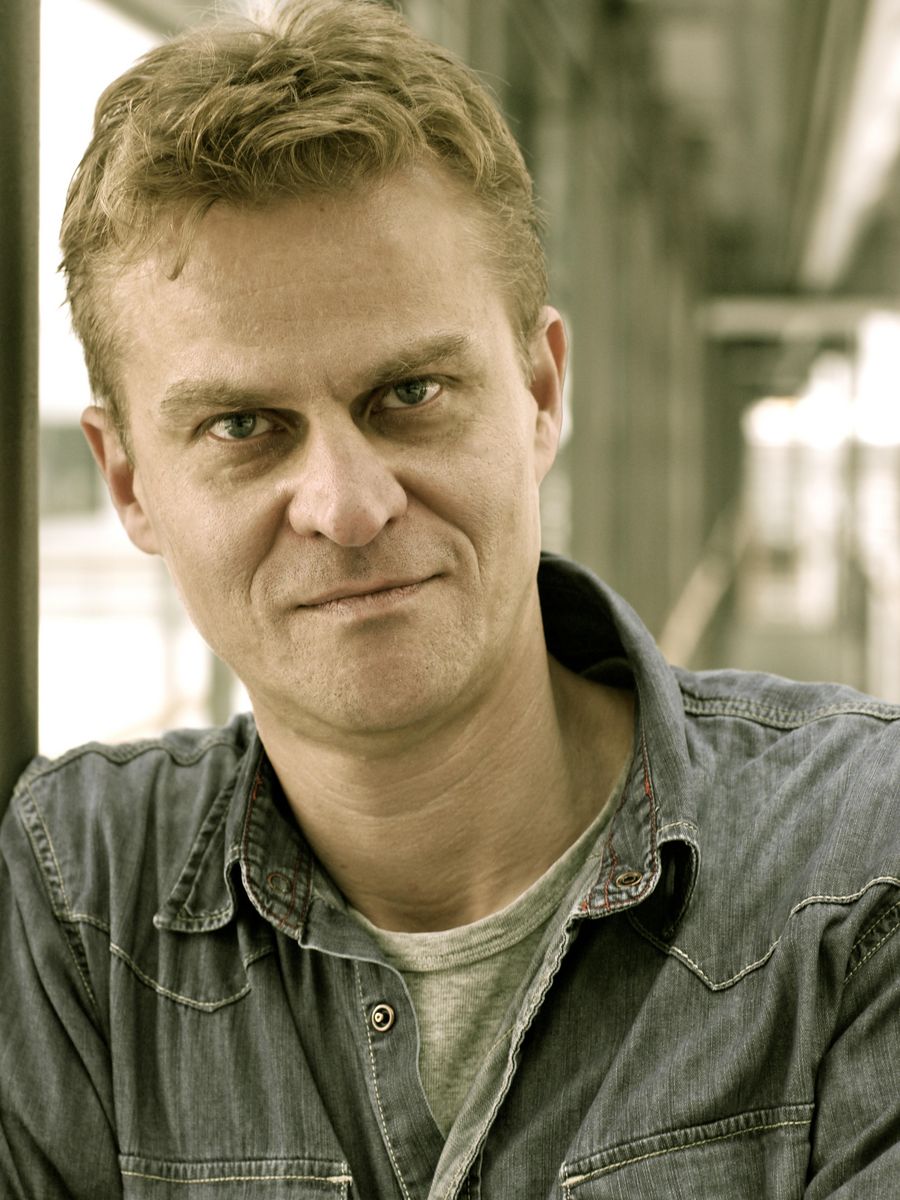
I am Mirko Lorenz. I work on language technology projects at Deutsche Welle in Germany. I co-founded Datawrapper, a charting tool used in many newsrooms.
Three projects you will hear about in this newsletter from time to time:
plain X (plainx.com) — media localisation platform, DW Innovation / Priberam
ChatEurope (chateurope.eu) — AI chatbot network for 15 European news partners
Cleanfeed — verified, transparent journalism in an era of disinformation and AI slop. New DW Innovation project, started May 2026. Background: "Why content needs a fingerprint, not just a watermark" (DW Innovation, May 2026); technical overview at Fraunhofer FOKUS.
AI use: I use Claude (Anthropic) for research and to edit this newsletter, based on refined and specific prompts. The goal is to get help and to find out where AI makes mistakes. Responsibility for stated facts, names, and links is entirely mine.
babylon-newsletter.com · Every Tuesday · 7,000 languages. AI works for 20.